Tooth Pain & Sensitivity
Patients don’t need to live with painful or sensitive teeth. At Alleman Dental, we pair research into the immune response of natural teeth with advanced adhesive materials to identify the source of your discomfort and treat the cause.
The tooth’s immune response
Teeth are naturally designed to withstand infection and wear thanks to their unique structure.
Tooth structure:
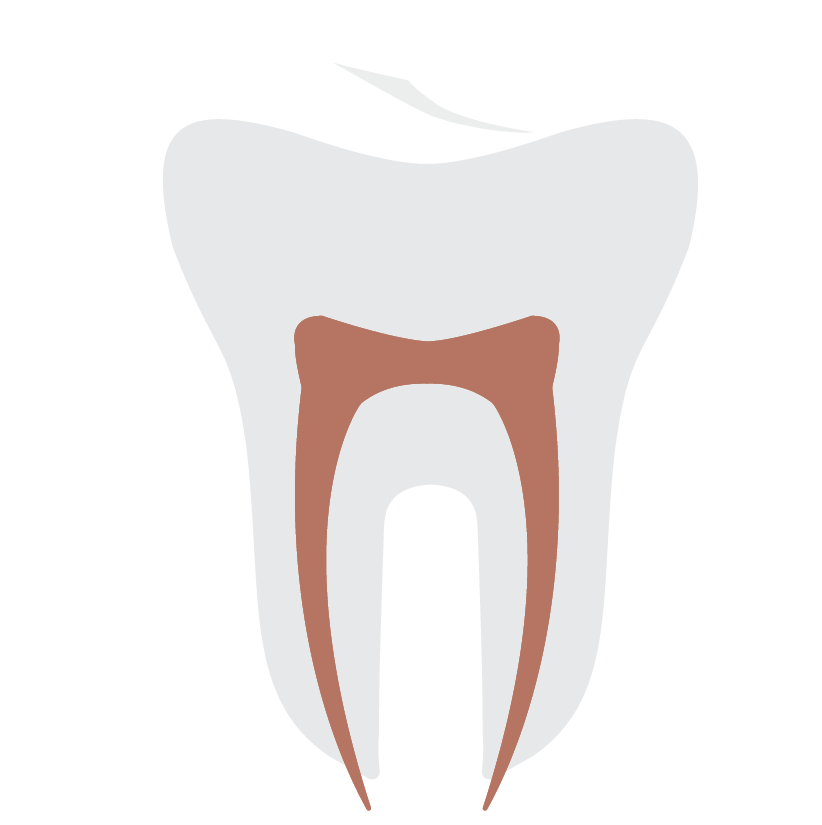
Enamel is the hard outer coating of teeth that protects from daily wear and tear, while sealing the inside of the tooth.
Dentin is the flexible interior of the tooth. Teeth bend and flex with every chew, so dentin prevents cracks as you chew hard or crunchy foods.
The pulp is the tooth’s nerve. At the center of each tooth, the pulp uses pulpal fluid to fight infection and seal off entry points for bacteria that have entered the dentin.
Common causes of dental pain and sensitivity
Pain or sensitivity is an immune response from the pulp, your tooth’s way of telling you something is wrong. While the tooth will try to fend off infection itself, the most conservative treatment option for your tooth is to schedule a dentist appointment as soon as you feel pain or sensitivity. Treating cracks and caries early can save critical tooth structure, offering the most minimally invasive treatment options for your tooth.
Enamel wear and exposed dentin
Enamel can wear over time, exposing the dentin underneath. The pulp may react similarly to dentin exposed by decay, eliciting a sensation of pain when hot or cold foods are consumed. Topical solutions can dull this sensation, and in areas with severe wear, composite can be bonded to the area to seal the exposed dentin. Schedule an exam to confirm that decay, cracks or a failing restoration are not the source of the sensitivity.
Cracks
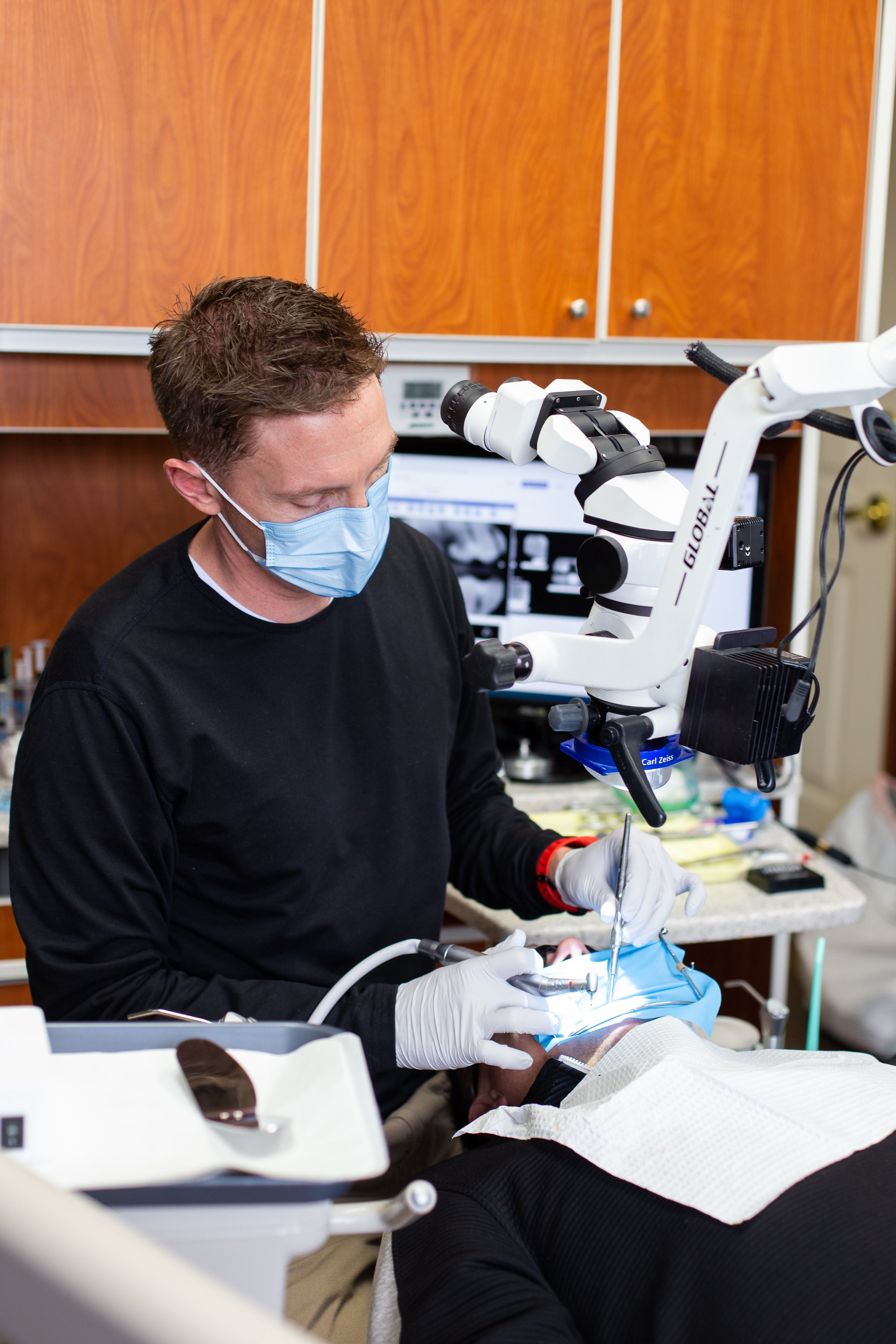
Cracks forming in your teeth are another common cause of dental pain and sensitivity. Most cracks in teeth are not from traumatic force but from small cracks that grow larger over time. This may feel like pain that comes and goes, rather than constant pain. At Alleman Dental, we use microscopes with every treatment to ensure any cracks in your tooth are treated.
Decay
Decay creates a cavity in your tooth, exposing dentin under the outer enamel shell. This can cause sensitivity as the pulp attempts to fight off the infection where dentin is exposed. During your exam, Dr. Alleman will use X-ray imaging, high magnification and caries detector dye to precisely locate any decay on your tooth to identify the source of any symptoms. Removing the carious lesion is the first step to resolving symptoms.
Failing restoration (post-operative sensitivity)
Many patients experience pain or sensitivity on teeth that have been restored. This is most commonly caused by cracks left under the restoration or a poor bond to the tooth. Both cracks and failing bonds expose dentin under your restoration, triggering the pulp’s immune response along with pain and sensitivity.
How we treat dental pain and sensitivity
Many patients come to Alleman Dental for second opinions after having restorations that result in post-operative sensitivity or after receiving a recommendation for root canal therapy and seeking a more conservative approach. We are able to offer better outcomes for patients thanks to the work of our founder, Dr. David Alleman, DDS, who, through a five-year literature review, developed a system for restoring teeth in a way that mimics natural teeth: biomimetic restorative dentistry.
Precise treatment of pathologies
Predictable treatment is key for predictable outcomes. At Alleman Dental, we use tools like caries detector dye and high magnification to ensure that caries and cracks are fully removed where the restoration bonds to your natural tooth. This eliminates the cause of your pain or sensitivity before restoring your tooth.
Advanced adhesive dentistry: biomimetic dentistry
“Get bonded, stay bonded!”
This is a phrase Dr. David Alleman, DDS, coined when he began teaching biomimetic protocols to other dentists. The second part, “stay bonded,” is the challenge. Especially with large cavities or deep cracks, special techniques are necessary to create a bond to your tooth that can last for decades. This long-lasting bond supports your natural tooth structure to stop new cracks from forming and seals the dentin and pulp to stop sensitivity. At Alleman Dental, we know your restoration will get bonded and stay bonded.
Watch our video to learn more about biomimetic restorative dentistry
Become an Alleman Dental Patient
Schedule your appointment online
Contact our patient care coordinator, Sheila, to learn more about our personalized dental care
Request an online treatment consultation with Dr. Alleman
Information for out of town patients
Learn more about membership plans, billing and insurance