
Dental Second Opinions
Modern dental care offers patients more options than ever before. Thanks to improvements in dental bonding materials and techniques, many patients can now conserve more of their healthy tooth structure and keep their natural teeth longer. Crowns, root canal therapy, extractions and implants are no longer a patient’s only options. Read more about minimally invasive alternatives with biomimetic restorative dentistry.
When to seek a second opinion for dental treatment
We recommend patients seek a second opinion any time aggressive dental treatment is recommended. This includes crowns, endodontic treatment (root canal therapy), extraction and implants. Biomimetic restorative dentistry offers patients more options that save their natural teeth.
Root canal second opinion
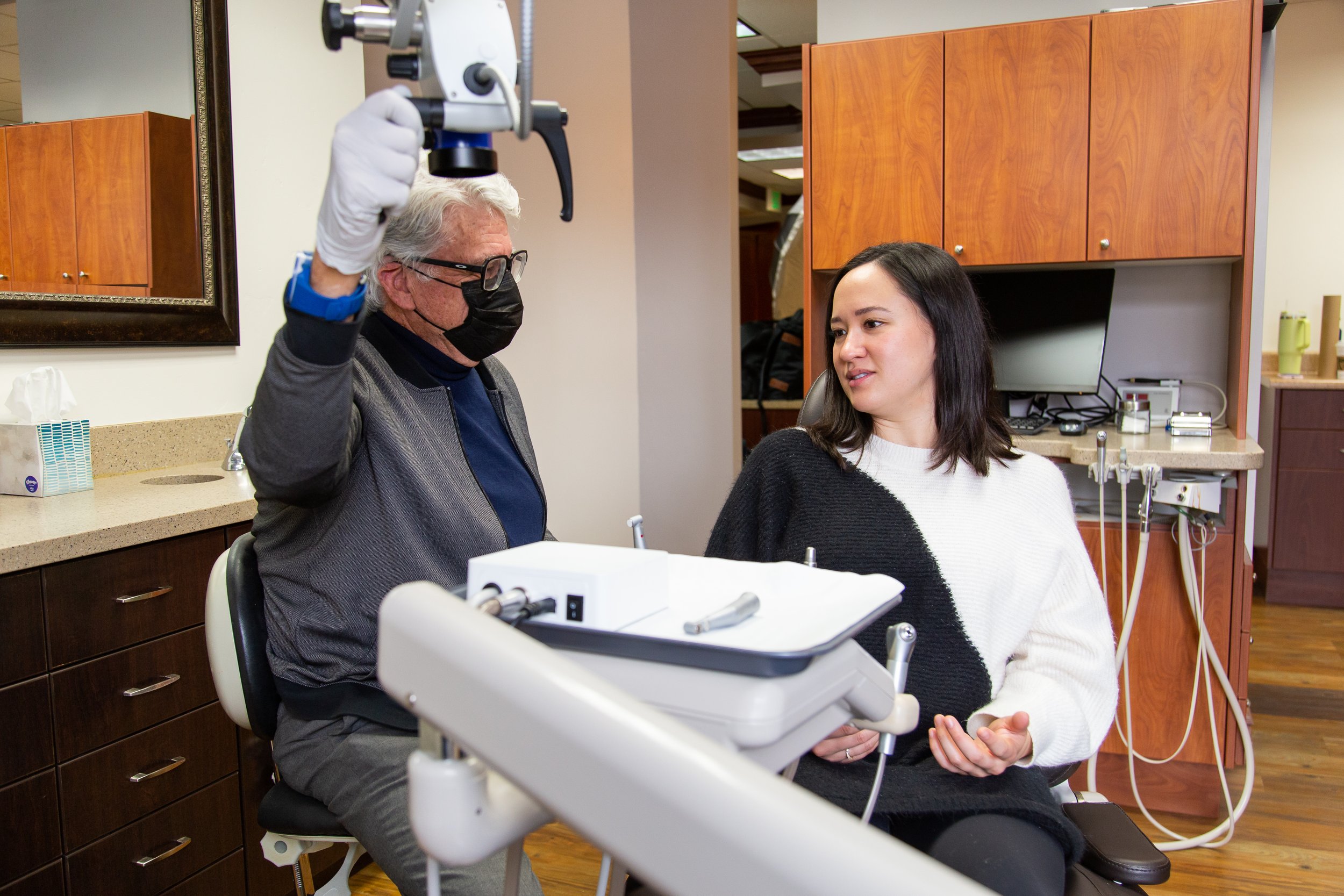
If your tooth is still experiencing symptoms, this indicates the tooth may still be vital, and you should seek a second opinion. Many dentists will recommend root canal therapy for vital teeth with deep caries or cracks when they lack bonding protocols that allow the nerve to heal after treating deep pathologies. The biomimetic bonding protocols we use at Alleman Dental can seal the pulp and give it a chance to heal in many cases.
Alternatives to full-coverage crowns
Crowns remove critical tooth structure at the base of your tooth, there natural teeth absorb the forces of chewing. At Alleman Dental, our biomimetic bonding protocols allow us to conserve this tooth structure where it is not affected by pathologies, allowing your restored tooth to function like a natural tooth. We would encourage any patient recommended for a full coverage crown to seek more conservative treatment
Second opinion for extraction and implants
Many teeth are recommended for extraction due to the difficulty of restoration, despite having functional tooth structure. Thanks to improvements in rubber dam isolation and techniques like deep margin elevation, more teeth can be restored. While this may only prevent extraction for a few years, at Alleman Dental, we assess the tooth’s history and current prognosis to give patients an estimate of their tooth’s remaining life and the option to restore rather than extract.
Stopping the cycle of dental death
The cycle of dental death refers to the cycle of retreatment patients experience with traditional dentistry. For example:
A patient has a small carious lesion and gets a filling.
A year or two later, more decay is found under the poorly sealed filling, so more of the tooth is cut away, and a larger filling is placed.
Next, the patient begins experiencing pain on biting. Cracks have formed around the large filling because the thin tooth structure around the filling material is not bonded and supported. Due to the size of the filling, a full-coverage crown is cut and placed.
The patient still experiences sensitivity. More decay is found under the crown, so root canal therapy is recommended to alleviate symptoms.
The crown falls off, but during the replacement appointment, the remaining tooth under the crown is also found to have fractured. Extraction is recommended.
How biomimetic stops the progression, no matter where your tooth falls the cycle:
A patient has a small carious lesion and gets a filling. The carious lesion and the healthy tooth structure is sealed, blocking new bacteria from entering. These fillings have been shown to stay bonded for 20+ years.
A year or two later, more decay is found under the poorly sealed filling, so more of the tooth is cut away and a larger filling is placed. A sensitive filling is replaced, fully treating the pathology to conserve healthy tooth structure, then sealed to prevent reinfection.
Next the patient begins experiencing pain on biting. Cracks have formed around the large filling because thin tooth structure around the filling material is not bonded and supported. Due to the size of the filling, a full-coverage crown is cut and placed. Large, symptomatic fillings are replaced with composite that is carefully bonded to the tooth to support surrounding tooth structure. This mimics the structure of a natural tooth, preventing cracks from forming.
The patient still experiences sensitivity. More decay is found under the crown, so root canal therapy is recommended to alleviate symptoms. Teeth that test vital are given a chance to heal by blocking the infection and restoring the tooth. This can prevent root canal therapy is most cases.
The crown falls off, but during the replacement appointment, the remaining tooth under the crown is also found to have fractured. Extraction is recommended. Due to the strong bonds of biomimetic dentistry, the bond to your tooth does not fail, blocking reinfection and supporting the natural tooth structure around the restoration.