Restorative Materials Used at Alleman Dental
See below for a list of materials and tools most commonly used during restorative treatment at Alleman Dental. Please note that, in some cases, we will use different materials if we feel they are better suited to your treatment needs. If you have specific questions or concerns, ask Dr. Alleman during your appointment or contact us in advance at office@allemandental.com.
Isolation
Isolation may be new to many patients who have had treatment with other providers in the past. Isolation helps us achieve the strongest possible bond to your tooth by eliminating salivary contamination during treatment. This includes:
Rubber dental dam: Non-latex rubber dental dams are used to isolate your tooth from your gums, tongue, cheek and saliva.
Rubber dam clamp: Metal clamps secure the dam to stop it from moving during treatment.
Additional tools may be used for deep cases, such as metal or plastic bands that help match the shape of your tooth, and plastic film or cord to retract the gum.
Because isolation is so important to the longevity of your restoration, every treatment uses it. Before we start treatment, we will ensure you are comfortable with the dam placement.
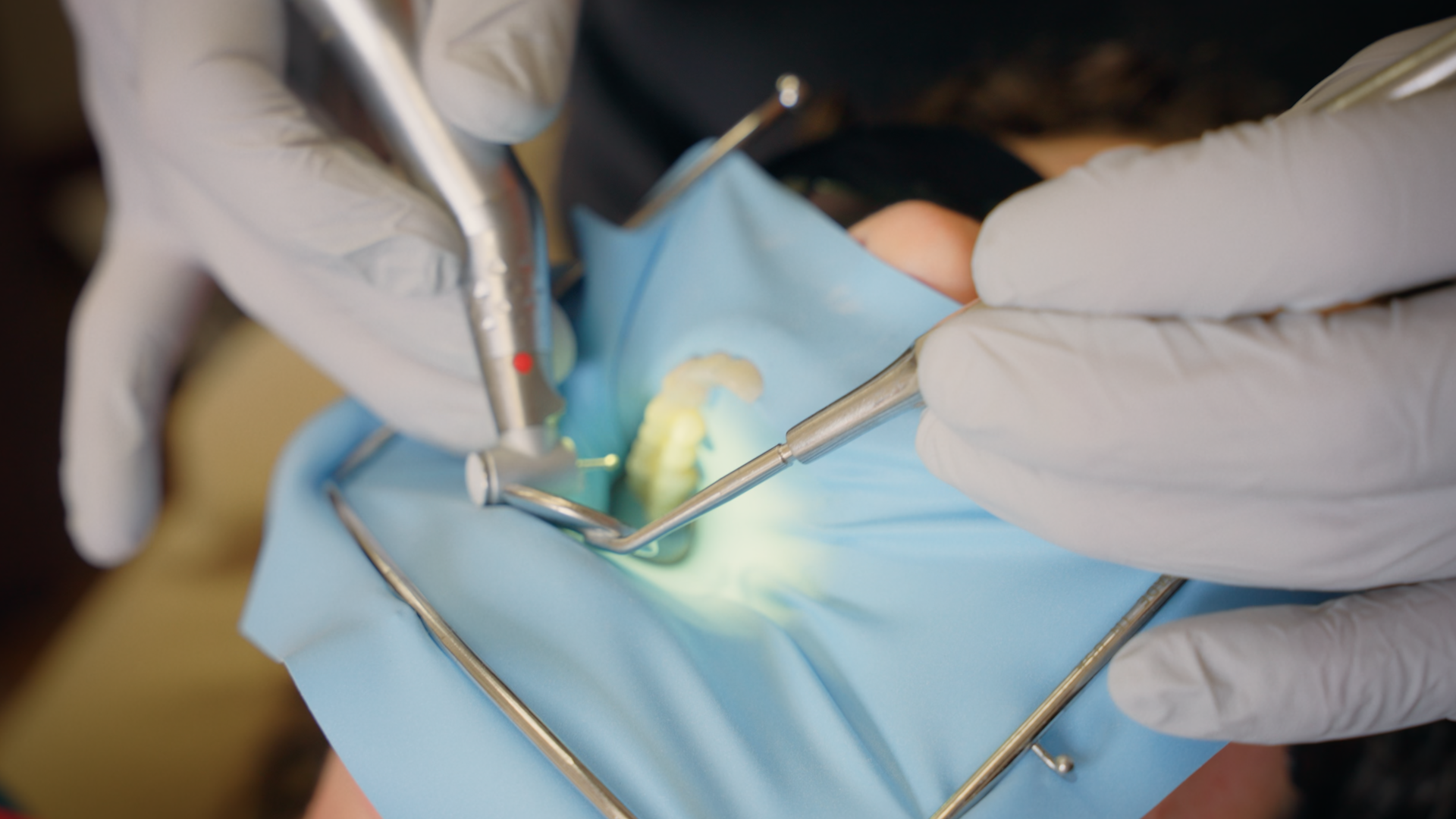
Dental isolation separates your tooth and the restorative materials from the rest of your mouth, so you can relax during treatment.
Diagnosis and treatment materials
Each case is unique, but generally, we use the following during diagnosis and treatment:
X-ray imaging: We use modern X-ray imaging that focuses directly on your tooth using extremely low radiation. This allows us to detect pathologies early without removing your existing restoration.
Caries detector dye: This red dye stains portions of your tooth that have been destroyed by caries (decay). The most effective way to stop tooth decay and protect your tooth’s vitality is to seal the tooth structure in a way that blocks bacteria from entering. This can only be done by bonding to areas of the tooth that are free from caries, so areas around your tooth’s nerve that stain with caries detector dye are removed before bonding.
Bonding system: The dentinal bonding system is the material used closest to your tooth, which allows us to create a biomimetic bond. These bonds mimic the strength at which a natural tooth is connected to itself, blocking bacteria to prevent infection and decay, supporting the tooth structure to prevent fracture, and staying bonded for decades to eliminate post-operative sensitivity. At Alleman Dental, we use Kuraray Clearfil SE Bond, Kuraray Clearfil SE Protect and Optibond FL.
Air particle abrasion: Air abrasion with sand particles (silicone dioxide) is used for treating small defects and preparing a bonding surface.
Resin coating: Resin coating creates a secure bond to protect your natural tooth. This means that if anything happens to the restorative material, it will fracture at the resin coating layer, rather than in your natural tooth. At Alleman Dental, we use Kuraray Majesty Flow.
Polyethylene fiber: Polyethylene fiber uses a leno weave design to distribute stress in your dental restoration. Think of this like rebar in concrete; larger restorations will create more stress to your natural tooth, so using polyethylene fiber reinforces the restoration to protect your natural tooth. At Alleman Dental, we use Ribbond.
Dentin replacement: For large or deep restorations, we will use a dentin replacement to raise your restoration above the gum line. At Alleman Dental, we use Kuraray AP-X.
Enamel replacement: Enamel replacement is the top of your tooth that comes into contact with the opposing tooth during chewing. Enamel replacement varies based on the size of your restoration and the health of your tooth, but we most commonly use Kuraray Majesty Posterior and ceramic (lithium disilicate) for enamel replacements.
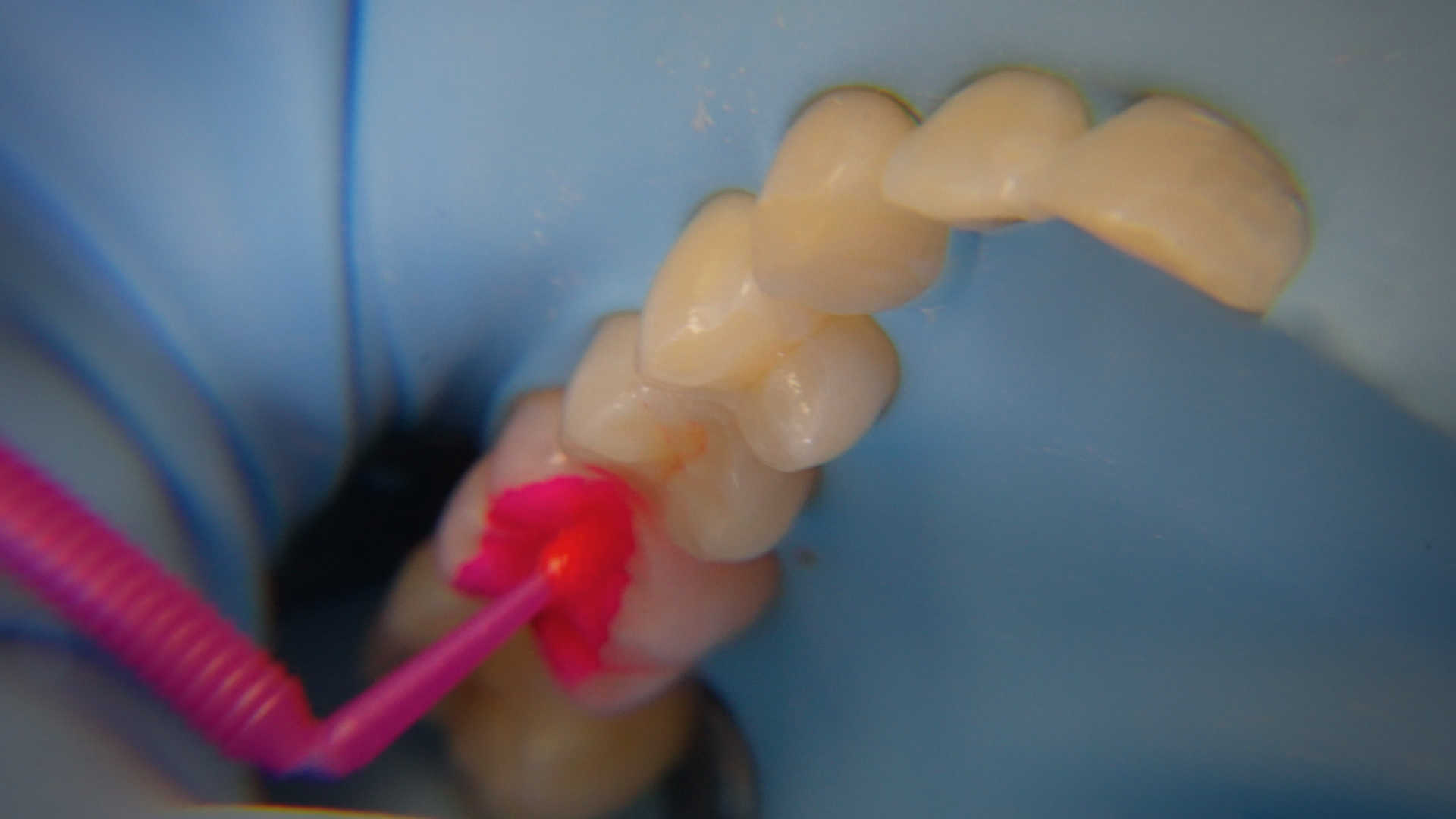
Caries detector dye is used to show exactly where decay has affected your tooth.
All materials at Alleman Dental are selected based on their performance in long-term, peer-reviewed studies and clinical testing. While these steps and materials are still much more complex than a traditional restoration that may use a bulk-fill composite or standard full-coverage crown preparation, they do not include excess. Every step and material is necessary to restore your tooth with a long-term bond that prevents recurrent pathologies, which saves our patients money and time, while offering the best in dental care.
Questions? Our Patient Care Coordinator, Sheila, will be happy to answer any questions about our treatment protocols and help you schedule an appointment. Contact her at office@allemandental.com or (801) 717-9860.